We'll tailor buying guides and product links to your country. You can change this anytime from the top bar.
Respiratory Health · Buying guide
Best Nasal Strips for Easier Night-Time Breathing in 2026
Three nasal strips compared on spring tension, adhesive hold, sizing and skin comfort — to help you choose the right one for nasal congestion or night-time snoring.
Nasal strips work mechanically rather than pharmacologically: a flexible spring bonded to an adhesive backing sits across the bridge of the nose and pulls the nasal valve open from outside. That makes them a drug-free option for people dealing with a blocked nose, seasonal congestion or night-time snoring, and it is why they are commonly used alongside — rather than instead of — other treatments. The trade-off is that everything depends on physical fit: a strip that lifts at the edges by 2am has stopped working, and one that grips too aggressively can irritate the skin it is stuck to.
We compared three widely available options on the factors that decide whether a strip earns a place on the bedside table: spring tension, how long the adhesive holds through a full night, the sizing and fit on offer, and how the adhesive behaves on sensitive skin. Each pick below is a verified, currently listed Amazon.co.uk product, with the badge reflecting who it suits rather than how it ranks overall.
How we tested & chose
We assessed nasal strips on four practical criteria — spring tension, overnight adhesive hold, sizing options and skin tolerance — using manufacturer specifications, listed materials and published customer feedback volume. Product names, pack counts and photography were verified directly against the live Amazon.co.uk listings on the date shown on each card.
What we weighed
Spring tension — enough lift to open the nasal valve without discomfortAdhesive hold across a full night, including warm or humid conditionsSizing and fit — sized options versus universal-fit stripsSkin tolerance — hypoallergenic and latex-free adhesive formulations
Nasal strips are a comfort aid, not a treatment. Persistent snoring, daytime tiredness or witnessed pauses in breathing during sleep should be assessed by a GP or sleep clinic, as these can indicate obstructive sleep apnoea. Speak to a pharmacist or clinician before use if you have fragile skin, an existing skin condition affecting the nose, or a recent nasal injury or surgery.
The picks, reviewed
No products have been added for United States yet.
Best Overall9.4/ 10 · Care Score
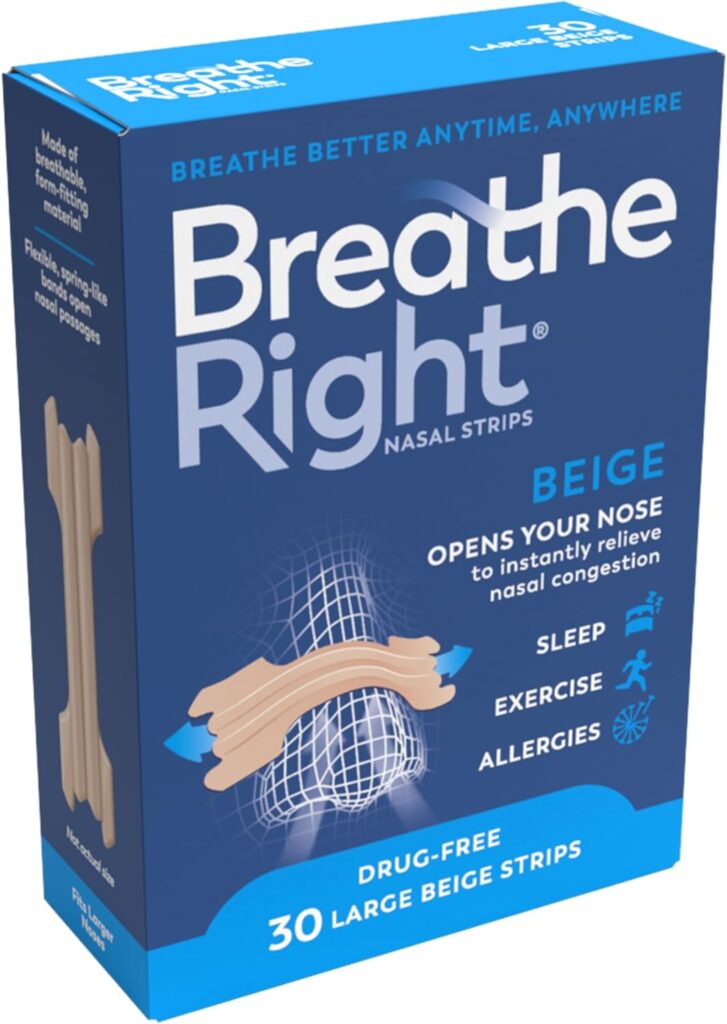
Breathe Right, Original Beige, Nasal Strips, Large, 30 Pieces | Nasal Strips for Snoring, Nose Strips for Breathing, Blocked Nose Relief, Drug-free Snoring Aid for Men and Women
The category benchmark — sized fit and a well-judged spring tension for everyday nightly use.
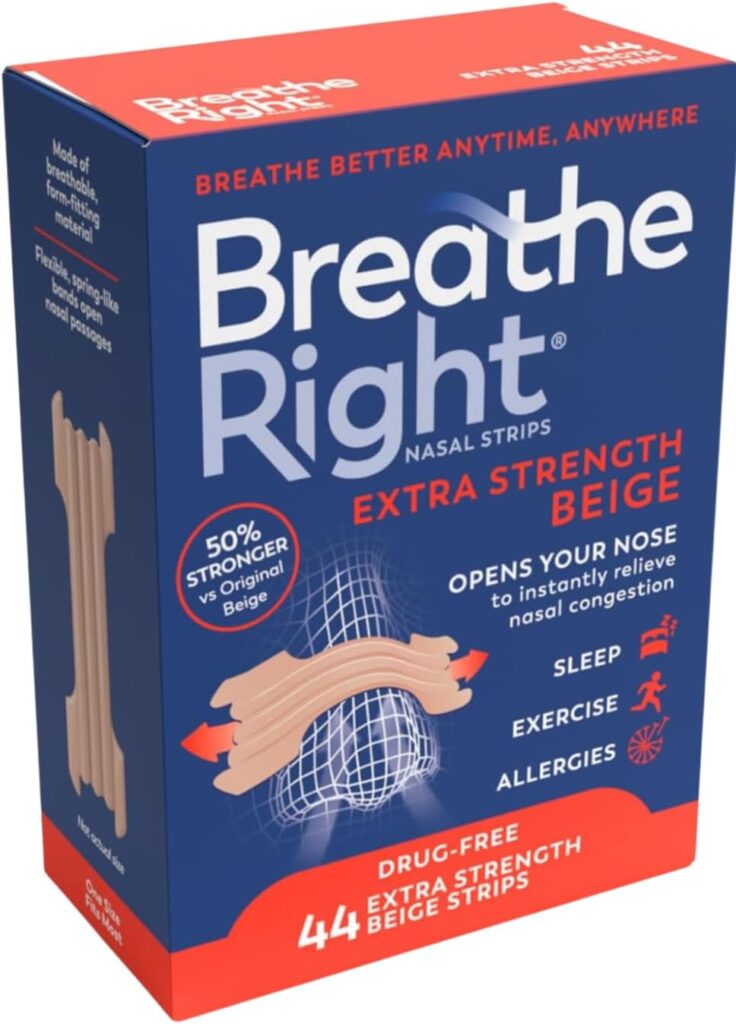
Breathe Right, Extra Strength Beige Nasal Strips, One Size, 44 Pieces | Nasal Strips for Snoring, Nose Strips for Breathing, Blocked Nose Relief, Drug-free Snoring Aid for Men and Women
A firmer spring and a larger pack, for stubborn congestion and consistent nightly use.
44-strip pack covers a long stretch of nightly use
Drug-free formulation
Cons
One-size fit suits smaller noses less well
Firmer tension can feel tight for the first few nights
Best for Sensitive Skin9/ 10 · Care Score
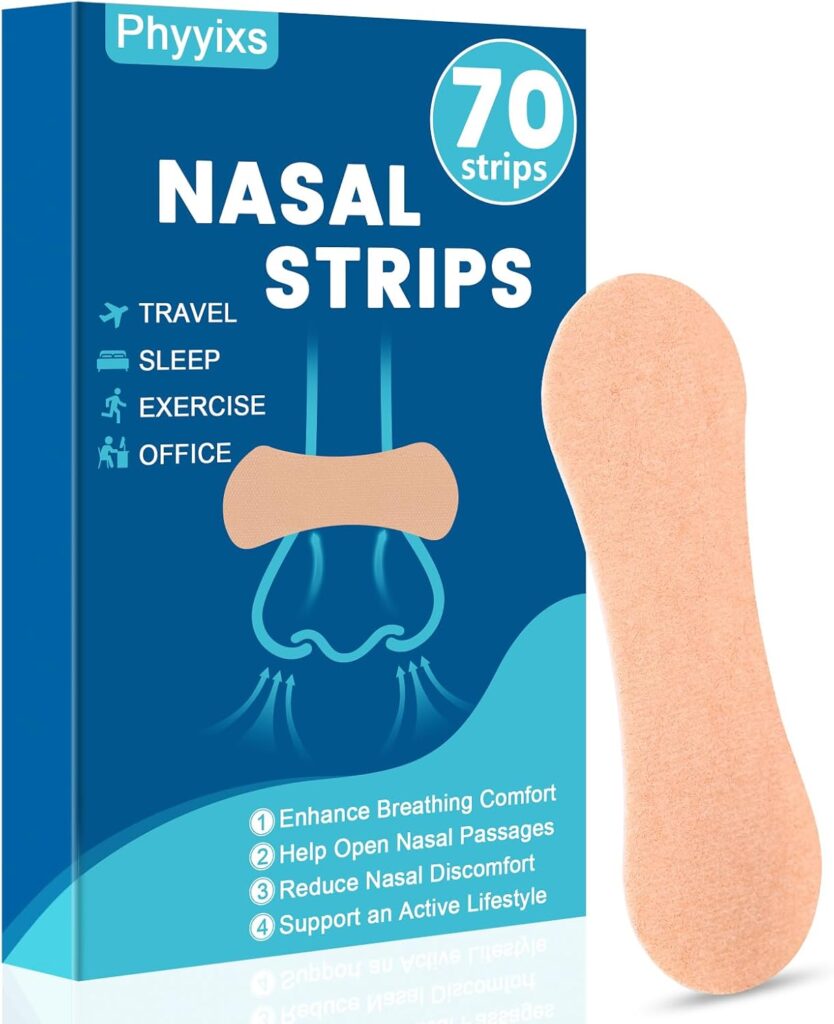
Nose Strips (70 Count) | Nasal Strips for Snoring & Breathing | Extra Strength Nose Strips for Sensitive Skin | Hypoallergenic & Sweat-Resistant | Universal Fit | Natural Color
Hypoallergenic, sweat-resistant adhesive for anyone whose skin objects to standard strips.
Own-brand listing with less independent testing behind it
No products have been added for United Arab Emirates yet.
Frequently asked questions
Quick answers to what readers ask most about nasal strips.
Do nasal strips actually reduce snoring?
They can help when the snoring originates from restricted airflow at the nasal valve, because widening that opening reduces the turbulence that produces the sound. They do nothing for snoring that originates further back, in the soft palate or throat, which is the more common source. If a strip makes no difference after a week or two of consistent use, the cause is probably not nasal.
Where exactly should the strip sit on my nose?
Just above the flare of the nostrils, across the soft part of the nose rather than the bony bridge. Placing it too high is the single most common mistake — the spring then pulls against bone and achieves nothing. Wash and dry the skin first, as the adhesive will not bond properly to moisturiser, facial oil or make-up.
Is it safe to use nasal strips every night?
They are drug-free and non-habit-forming, and manufacturers generally indicate them for nightly use. The limiting factor is usually skin rather than safety — repeated application and removal in the same spot can leave the area red or sore. Rotating the position very slightly and choosing a gentler adhesive helps. Follow the instructions supplied with the product you buy.
Do they help with colds and hay fever?
They can make breathing through a blocked nose easier by mechanically widening the airway, which is why they are often used during a cold or in pollen season. They do not treat the underlying inflammation, infection or allergy, so they are best thought of as a physical aid used alongside whatever your pharmacist or GP recommends.
What should I do if my skin reacts or the strip leaves residue?
Remove strips in the shower or after wetting the face with warm water, peeling slowly from both ends towards the centre rather than pulling sharply. Any adhesive left behind lifts with a little warm water. If redness or irritation persists, stop using them and switch to a hypoallergenic, latex-free formulation, or ask a pharmacist for advice.
Some links above are affiliate links. As an Amazon Associate we earn from qualifying purchases, at no extra cost to you. Links go to Amazon.com. Prices are illustrative — check the current price before buying.
Medical disclaimer. This guide is for general information only and is not medical advice. It is not intended to diagnose, treat, cure or prevent any condition. Always speak to a qualified healthcare professional before starting any new product, especially if you have an existing condition or take medication.