We'll tailor buying guides and product links to your country. You can change this anytime from the top bar.
Mental & Cognitive Health · Buying guide
Best Ashwagandha Supplements for Everyday Stress in 2026
A KSM-66 capsule complex, a one-a-day tablet and a chewable gummy compared on standardised extract weight, serving and format — to help you choose on the number that actually matters.
Ashwagandha is sold on a promise its label is not allowed to make. Distributing Care compared the three best-selling formats in Amazon UK’s Ashwagandha category on the one figure that separates them — the weight of standardised root extract in a serving, not the four-digit ‘equivalent’ number printed on the front of the pack.
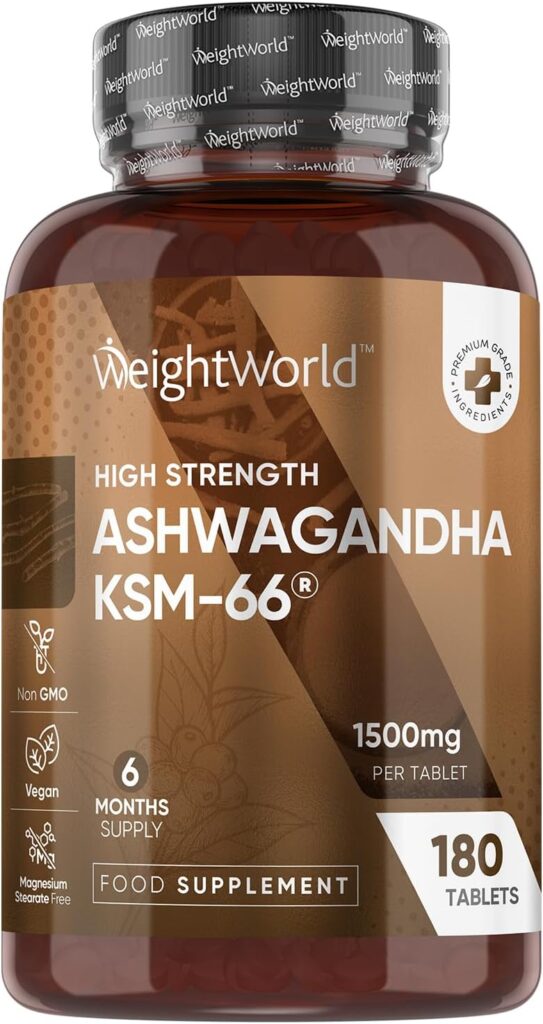
All three picks come from the top ten of that Best Sellers list, ranked by units sold rather than by search relevance. Each is compared below on extract, daily serving and format — a capsule complex, a one-a-day tablet and a chewable gummy — alongside what UK rules actually permit anyone to claim about the herb.
How we tested & chose
Distributing Care shortlisted from Amazon UK’s Best Sellers in Health & Personal Care › Vitamins, Minerals & Supplements › Herbal Supplements › Ashwagandha, taking the three highest-ranked products with genuinely different formats. Combination products pairing ashwagandha with lion’s mane were set aside, because they cannot be judged on ashwagandha alone. Doses were read from the manufacturer listings, and permitted wording was checked against the GB nutrition and health claims register, where ashwagandha has no authorised entry.
What we weighed
Best Sellers rank in the Ashwagandha categoryStandardised extract weight per servingFormat and daily serving countWhat the label is permitted to say
Compiled by the Distributing Care editorial team. Food supplements are not medicines and are not licensed by the MHRA. Speak to a GP or pharmacist before starting ashwagandha — particularly during pregnancy or breastfeeding, alongside thyroid or sedative medication, or with any liver condition.
The picks, reviewed
No products have been added for United States yet.
Best Overall9.4/ 10 · Care Score
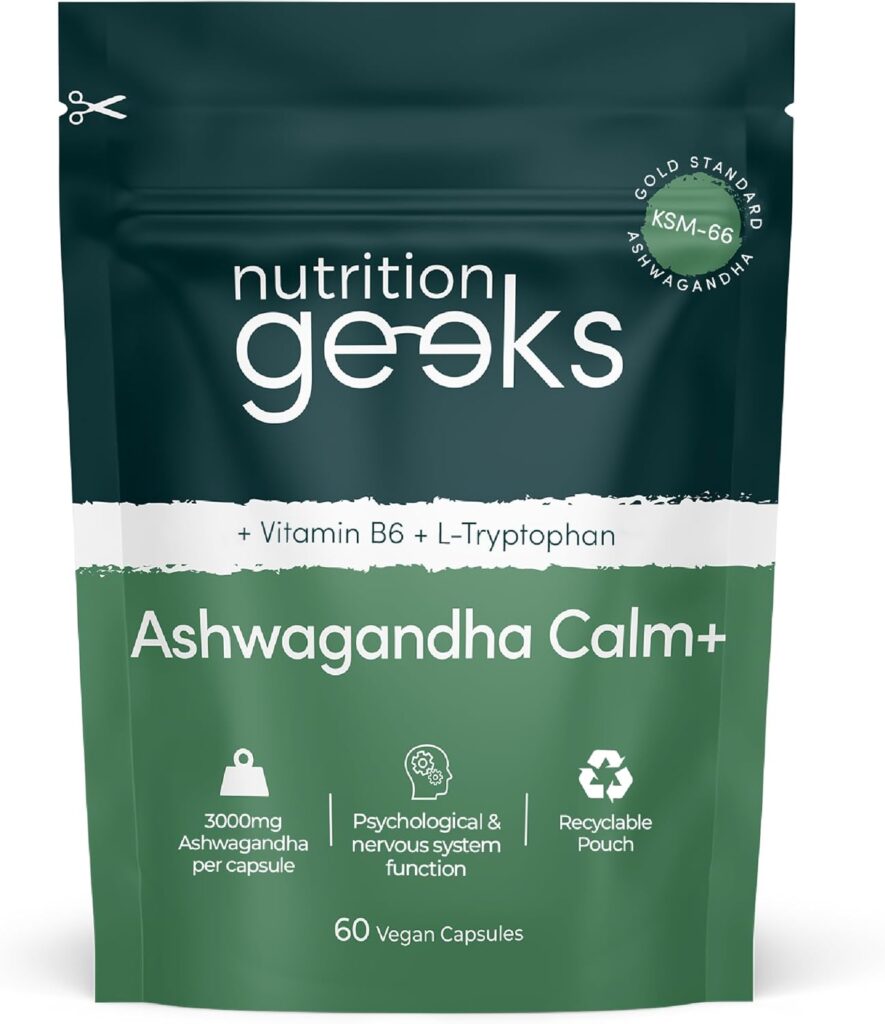
Ashwagandha KSM 66 Complex – 3000mg Enhanced with L-Tryptophan & Vitamin B6 (2 Month Supply) – Ashwagandha High Strength Capsules with 250mg Extract (Not Gummies or Powder) - Vegan, UK Made
Rank 1 best seller: a KSM-66 capsule that states its actual extract weight, not just the root equivalent.
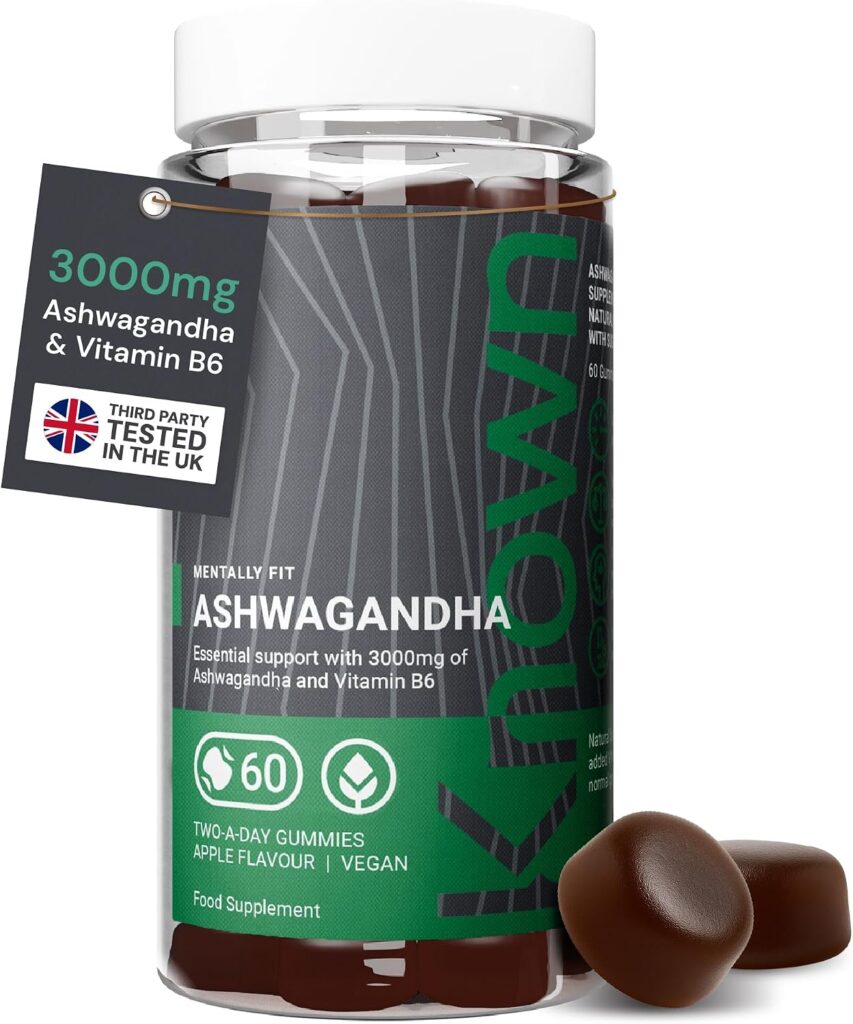
Chewable format suits anyone who struggles with tablets
One-month pack is a low-commitment way to try it
Cons
Gummies usually carry added sugars — check the label
One month only, so reordering comes round quickly
No products have been added for United Arab Emirates yet.
Frequently asked questions
Quick answers to what readers ask most about ashwagandha supplements.
How much ashwagandha do clinical studies actually use?
Most trials use 300 to 600 mg a day of a standardised root extract, taken over six to eight weeks. The four-digit figures on the front of a pack — 1500 mg, 3000 mg, 6000 mg — are usually root-powder equivalents calculated from an extract ratio, not the weight of extract in the capsule. The extract weight is the number worth comparing, and it is normally further down the listing rather than on the front.
What does KSM-66 mean on an ashwagandha label?
KSM-66 is a branded ashwagandha extract made from the root only and standardised to a set withanolide content, so two products carrying it are delivering a comparable ingredient. It tells you what is in the capsule, not how much — that is set by the serving size, which is why two KSM-66 products can differ substantially.
Is ashwagandha allowed to claim anything on the pack in the UK?
No. Ashwagandha has no authorised entry on the GB nutrition and health claims register, so a supplement cannot lawfully claim it treats stress, anxiety or sleep. Where a pack does carry a permitted claim, it usually belongs to an added vitamin rather than the herb: vitamin B6, for example, has authorised claims for contributing to normal psychological function and to normal functioning of the nervous system.
Who should avoid ashwagandha?
Ashwagandha is not recommended during pregnancy or breastfeeding. Anyone taking thyroid medication, sedatives or immunosuppressants, anyone with a liver condition, and anyone due to have surgery should speak to a GP or pharmacist first. Case reports of liver injury associated with ashwagandha supplements have been published, so stop taking it and seek medical advice if jaundice, dark urine, unusual tiredness or abdominal pain develop.
How long before you would expect to judge it?
Trials that report an effect generally run for six to eight weeks, so a one-month pack is a trial run rather than a fair test. Judge a supplement over that kind of period rather than over days, and keep the rest of the routine — sleep, caffeine, exercise — steady enough that any change can reasonably be attributed to anything at all.
Some links above are affiliate links. As an Amazon Associate we earn from qualifying purchases, at no extra cost to you. Links go to Amazon.com. Prices are illustrative — check the current price before buying.
Medical disclaimer. This guide is for general information only and is not medical advice. It is not intended to diagnose, treat, cure or prevent any condition. Always speak to a qualified healthcare professional before starting any new product, especially if you have an existing condition or take medication.