We'll tailor buying guides and product links to your country. You can change this anytime from the top bar.
Mobility & Rehabilitation · Buying guide
Best Grab Rails for Safer Bathrooms in 2026
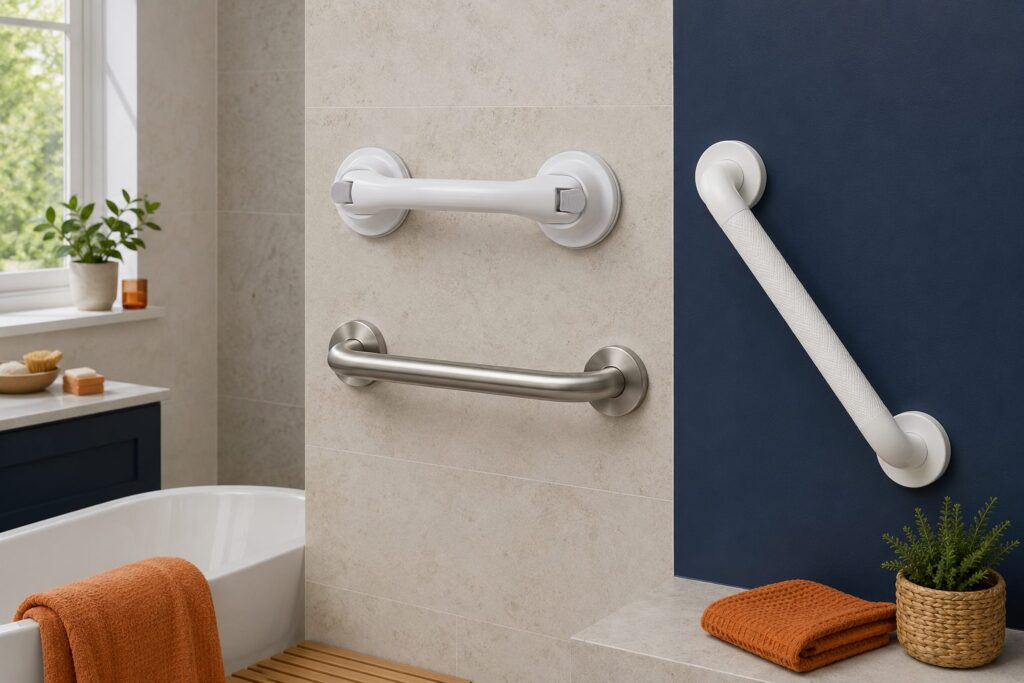
Three bathroom grab rails compared on length, fixing method and grip surface — to help you tell a permanent screw-fixed rail from a temporary suction one.
Most bathroom falls happen in the same two places: stepping into a bath or shower, and standing up from the toilet. A grab rail placed correctly at one of those points is among the cheapest meaningful safety changes you can make to a home, and it does not require an occupational therapist to specify.
We compared three rails on length, fixing method, grip surface and material. The critical distinction is between screw-fixed rails, which take a person’s full weight when properly installed into a sound substrate, and suction rails, which do not and should never be relied on for load-bearing support.
How we tested & chose
We compared rail length, fixing method, grip material and indoor or outdoor suitability across three UK-listed rails, using the manufacturers’ published specifications.
What we weighed
Rail length and wall clearanceFixing method — screw-fixed or suctionGrip surface and materialIndoor-only or outdoor-rated
Compiled by the Distributing Care editorial team from manufacturer specifications. Grab rails must be fixed into a sound structural substrate — tile alone is not sufficient. If you are unsure, use a qualified fitter, and ask your local authority about an occupational therapy assessment.
The picks, reviewed
No products have been added for United States yet.
Best Overall9.3/ 10 · Care Score
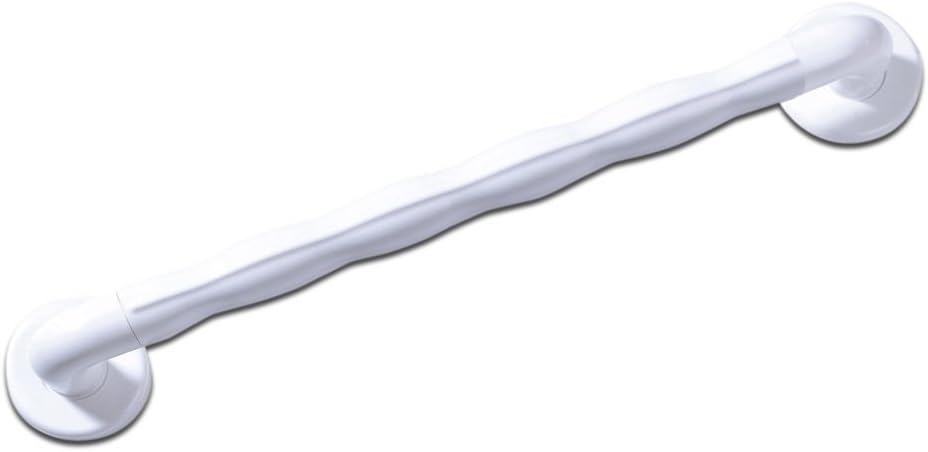
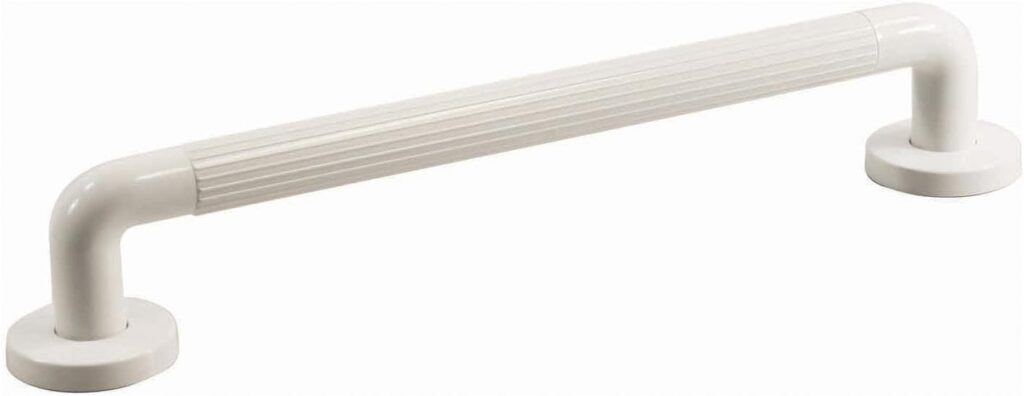
NRS Natural Grip Grab Rail - 45 cm (18 inch) Length - White
A screw-fixed 45cm rail from a UK healthcare supplier, in the length that suits most bath and toilet positions.
No products have been added for United Arab Emirates yet.
Frequently asked questions
Quick answers to what readers ask most about bathroom grab rails.
Are suction grab rails safe?
Not for supporting body weight. They are intended as a light balance aid on a clean, flat, non-porous surface, and they can release without warning. Anything a person would lean or pull on properly should be screw-fixed — as all three rails here are.
Where should a grab rail be fitted?
The two highest-value positions are beside the bath or shower entry point and next to the toilet. Height should suit the user, not a standard — have them stand in place and mark a comfortable grip position.
Can I fit a grab rail into a tiled wall myself?
Only if you can reach a sound substrate behind the tile — masonry or a properly located stud. Fixing into tile and plasterboard alone will fail under load. If in doubt, use a fitter.
What length rail do I need?
450mm (18 inches) is the most common general-purpose size and suits most bath and toilet positions — all three rails here are that length. Longer rails suit stairs or where the user needs support through a longer movement.
Do I have to pay for grab rails?
Not always. Local authorities in the UK can provide minor home adaptations following an occupational therapy assessment, often free. Many people buy privately to avoid the wait — but it is worth requesting an assessment either way.
Some links above are affiliate links. As an Amazon Associate we earn from qualifying purchases, at no extra cost to you. Links go to Amazon.com. Prices are illustrative — check the current price before buying.
Medical disclaimer. This guide is for general information only and is not medical advice. It is not intended to diagnose, treat, cure or prevent any condition. Always speak to a qualified healthcare professional before starting any new product, especially if you have an existing condition or take medication.