We'll tailor buying guides and product links to your country. You can change this anytime from the top bar.
Home Healthcare & Monitoring · Buying guide
Best Pulse Oximeters for Home Oxygen Monitoring in 2026
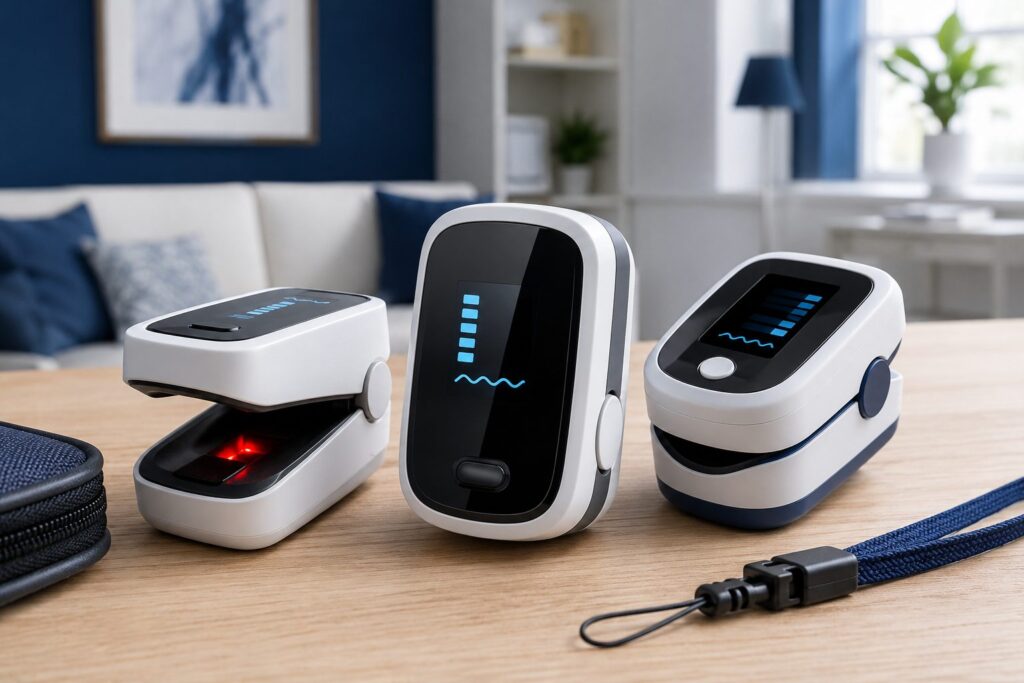
Three fingertip pulse oximeters compared on stated suitability, listed clinical uses and how each one is meant to be used — to help you choose one you can rely on for home oxygen monitoring.
A pulse oximeter is the cheapest way to turn “I feel short of breath” into a number someone can act on. The device clips onto a fingertip, shines light through the tissue and reports blood oxygen saturation (SpO2) alongside pulse rate — the same two figures a clinician checks first. For anyone living with a long-term respiratory condition, recovering at home, or simply wanting a reliable reading before ringing 111, it is one of the few home monitors whose output maps directly onto NHS advice.
Distributing Care compared the three best-selling fingertip oximeters on Amazon UK on what each listing actually states: who the device is intended for, which conditions it is sold for, and what it measures. Reading thresholds throughout are taken from NHS guidance, not from any manufacturer’s marketing. The picks follow.
How we tested & chose
Distributing Care drew this shortlist from Amazon UK’s Best Sellers in Oximeters, taking the top three ranked fingertip devices rather than picking on brand preference. Every product fact on the cards below — name, photo and listing details — comes from the live Amazon listing; clinical reading thresholds come from NHS guidance on home pulse oximetry.
What we weighed
Stated suitability — adults only, or adults and childrenWhat the device measures — SpO2, pulse rate, or bothListed clinical uses, such as COPD or sleep apnoeaWhether a specific model number is given, for record-keeping
A pulse oximeter supports a conversation with a clinician; it does not replace one. If you have a lung or heart condition, ask your GP what your normal range is before relying on any home reading, and follow NHS advice on when to seek urgent help.
The picks, reviewed
No products have been added for United States yet.
Best Overall9.4/ 10 · Care Score
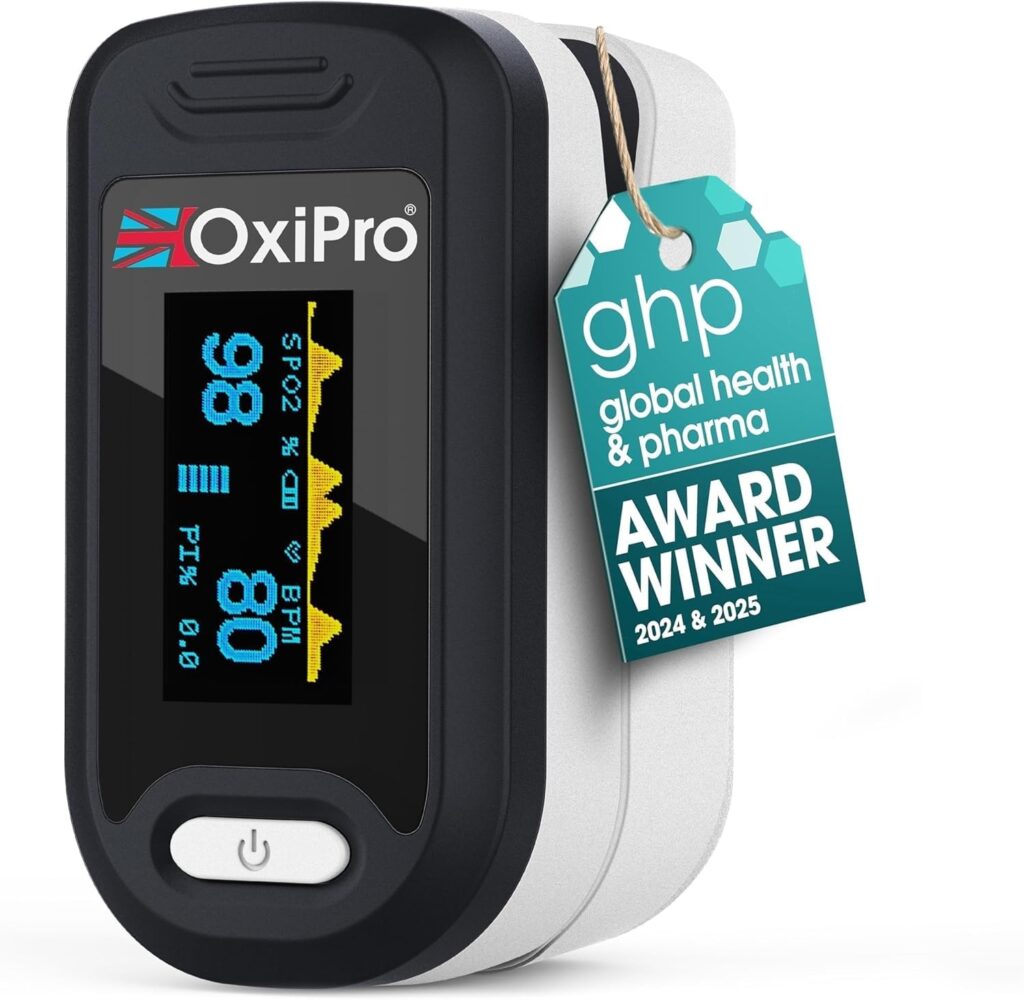
OxiPro OX2 Oximeter - Health & Pharma Awards Winner 2026 - Fingertip Pulse Oximeter/Blood Oxygen Monitor - Finger Oxygen Saturation/SATS Monitor to measure SpO2 / Medical Device for Adults
Rank 1 best seller: a fingertip SpO2 and pulse monitor listed as a medical device for adults.
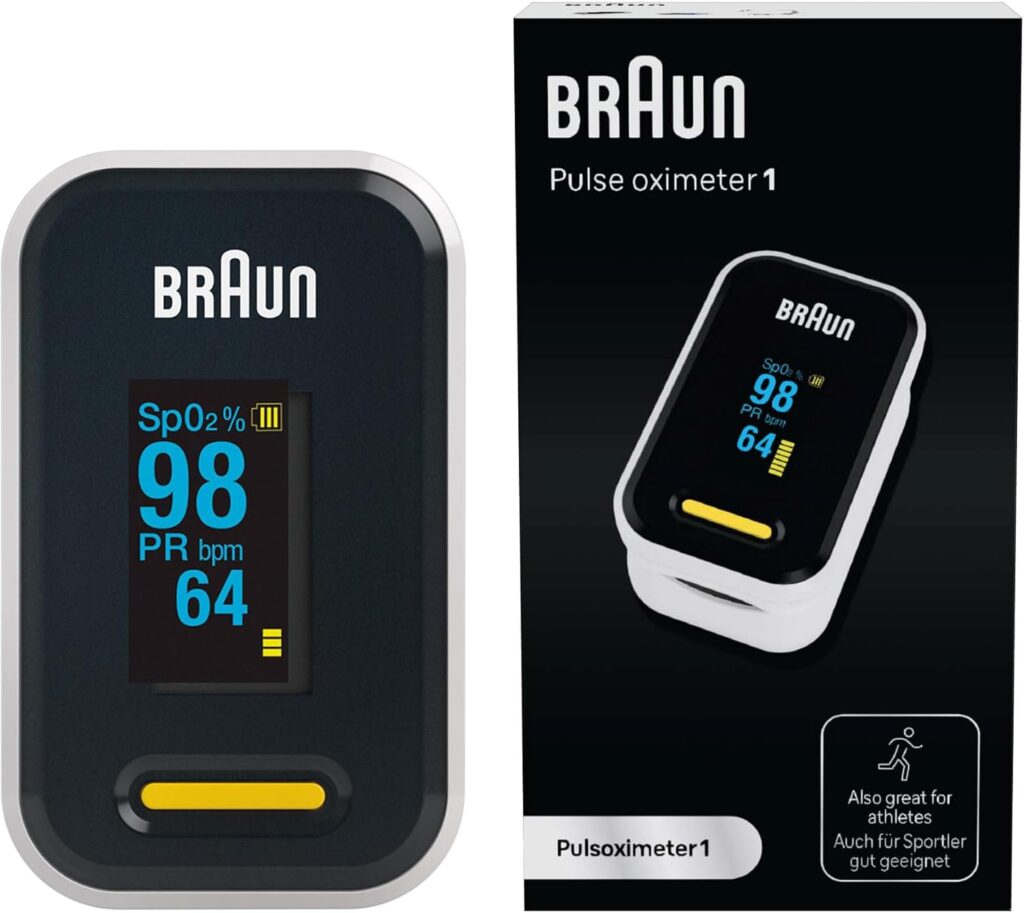
Braun Pulse Oximeter 1 | YK-81CEU | Accurate Blood Oxygen Finger Monitor| Easy-to-use at Home | For COPD, Pneumonia, Sleep Apnea Sufferers | Great for Athletes
Rank 2 best seller: a named model number, and the only pick whose listing states COPD, pneumonia and sleep apnoea use.
No products have been added for United Arab Emirates yet.
Frequently asked questions
Quick answers to what readers ask most about pulse oximeters.
What is a normal blood oxygen reading?
An ideal blood oxygen level is between 96% and 99%, according to NHS guidance on home pulse oximetry. Some people with existing lung conditions run lower than this even when they feel well, which is why the NHS advises asking your doctor what your own normal range should be rather than comparing yourself to a general figure.
When should I be worried about a pulse oximeter reading?
NHS guidance says a reading of 92% or below means you should go to A&E immediately or call 999, and give the oxygen saturation reading to the operator. A reading of 94% or 93%, or one that keeps sitting lower than your normal, means someone should be checking on you regularly. Treat a single odd reading with caution and repeat it before acting.
How do I take an accurate reading at home?
Rest for at least five minutes before clipping the oximeter on, then stay still while it settles. Remove nail polish or false nails from the finger you use, and warm cold hands first, because both interfere with the light the sensor relies on. NHS guidance suggests taking a reading three times a day at the same times and writing each one in a diary, since the trend matters more than any single number.
Do pulse oximeters work equally well on all skin tones?
Not equally, no. Pulse oximeters can be less accurate on darker skin tones and may overestimate oxygen saturation, so a reading can look reassuring when it should not. This is a recognised limitation of the technology rather than a fault in any one device. Use readings alongside how you actually feel and the trend over time, and mention any symptoms to a clinician even if the number looks acceptable.
Can I use a fingertip pulse oximeter on a child?
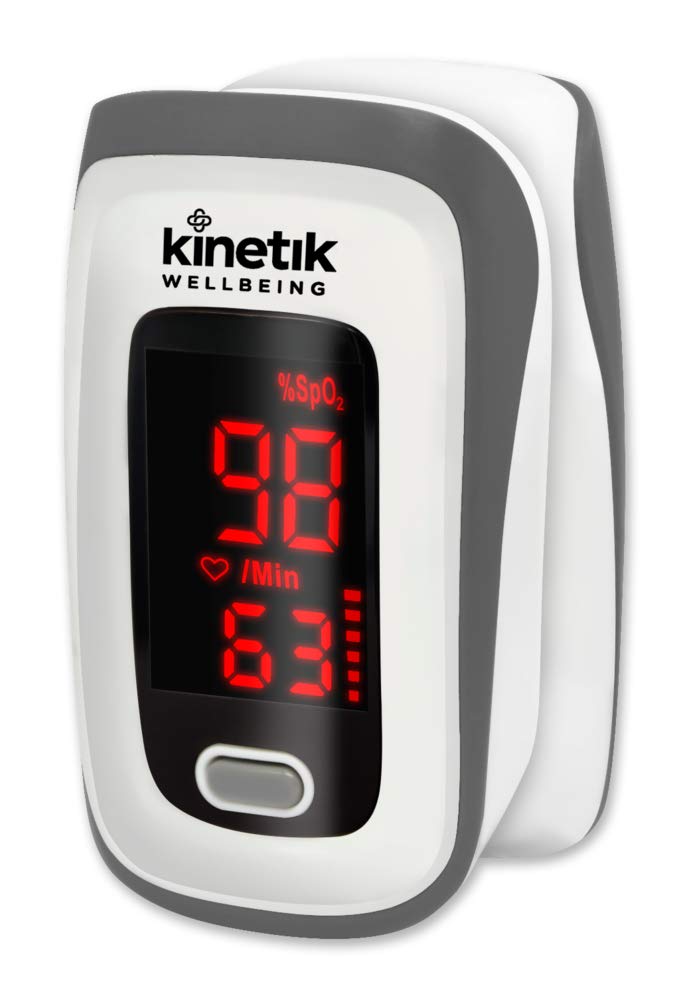
Only if the device states that it is suitable for children. Fingertip oximeters are calibrated for a finger of a certain size, and an adult-only clip may not seat correctly on a small finger, which produces unreliable readings. Of the three picks here, the Kinetik Wellbeing model is listed for adults and children, while the OxiPro OX2 is listed for adult use. Check the listing before buying for a child.
Some links above are affiliate links. As an Amazon Associate we earn from qualifying purchases, at no extra cost to you. Links go to Amazon.com. Prices are illustrative — check the current price before buying.
Medical disclaimer. This guide is for general information only and is not medical advice. It is not intended to diagnose, treat, cure or prevent any condition. Always speak to a qualified healthcare professional before starting any new product, especially if you have an existing condition or take medication.