We'll tailor buying guides and product links to your country. You can change this anytime from the top bar.
Water & Air Purification · Buying guide
Best Water Filter Jugs for Cleaner Home Water in 2026
Three of Amazon UK's best-selling water filter jugs compared on capacity, cartridges and convenience, to help you choose the right jug for your fridge and household.
For most UK homes, a filter jug is the simplest way to improve the taste of tap water. There is no plumbing or installation: you need a jug that suits your household and a cartridge you replace on schedule.
Distributing Care compared three of Amazon UK’s best-selling water filter jugs on capacity, cartridge type, what comes in the box and everyday convenience. Our picks are below, followed by answers to the questions readers ask most.
How we tested & chose
Our shortlist came from the top 10 of Amazon UK’s Best Sellers list for Water Filter Jugs, so every pick is a jug UK buyers are already choosing. Distributing Care compared them on the capacity, cartridge type, box contents and features each manufacturer lists.
What we weighed
Capacity for your householdCartridge type and how many are includedFilter-change remindersEveryday handling and refills
Distributing Care does not accept payment for placement. UK tap water is treated to drinking-water standards, so a jug mainly improves taste and odour and reduces limescale. If you are worried about your supply, contact your water company.
The picks, reviewed
No products have been added for United States yet.
Best Overall9.3/ 10 · Care Score
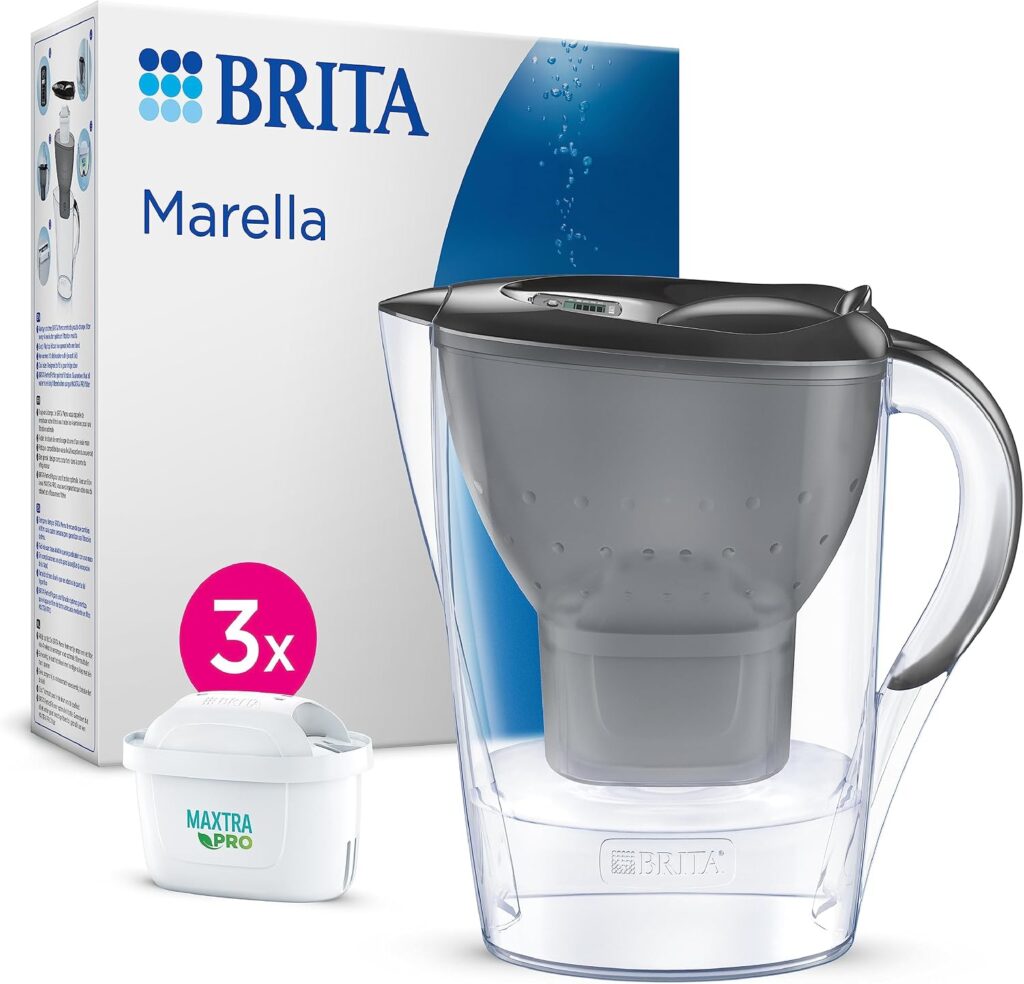
BRITA Water Filter Jug MAXTRA Marella, 3x Pure Performance cartridges
Amazon UK's best-selling filter jug: the 2.4 L Marella, sold with three MAXTRA Pure Performance cartridges.
The indicator is a reminder, not a water-quality test
No products have been added for United Arab Emirates yet.
Frequently asked questions
Quick answers to what readers ask most about water filter jugs.
Do I need a water filter jug in the UK?
UK tap water is treated to meet drinking-water standards, so a filter jug is about taste, odour and limescale rather than safety. If you have concerns about your supply, your water company can tell you about water quality in your area.
How often should I change a BRITA MAXTRA cartridge?
BRITA advises replacing a MAXTRA cartridge about every four weeks. If your water is very hard or you use the jug heavily, you may need to change it sooner. An old cartridge filters less well, so stick to the schedule.
Does a filter jug reduce limescale?
Yes. Filter jugs such as the BRITA MAXTRA range reduce limescale and chlorine, which makes them useful in hard-water areas, where they can cut scale in kettles. They do not remove everything: for more thorough filtration you would need a plumbed-in system such as reverse osmosis.
Should I keep a filter jug in the fridge?
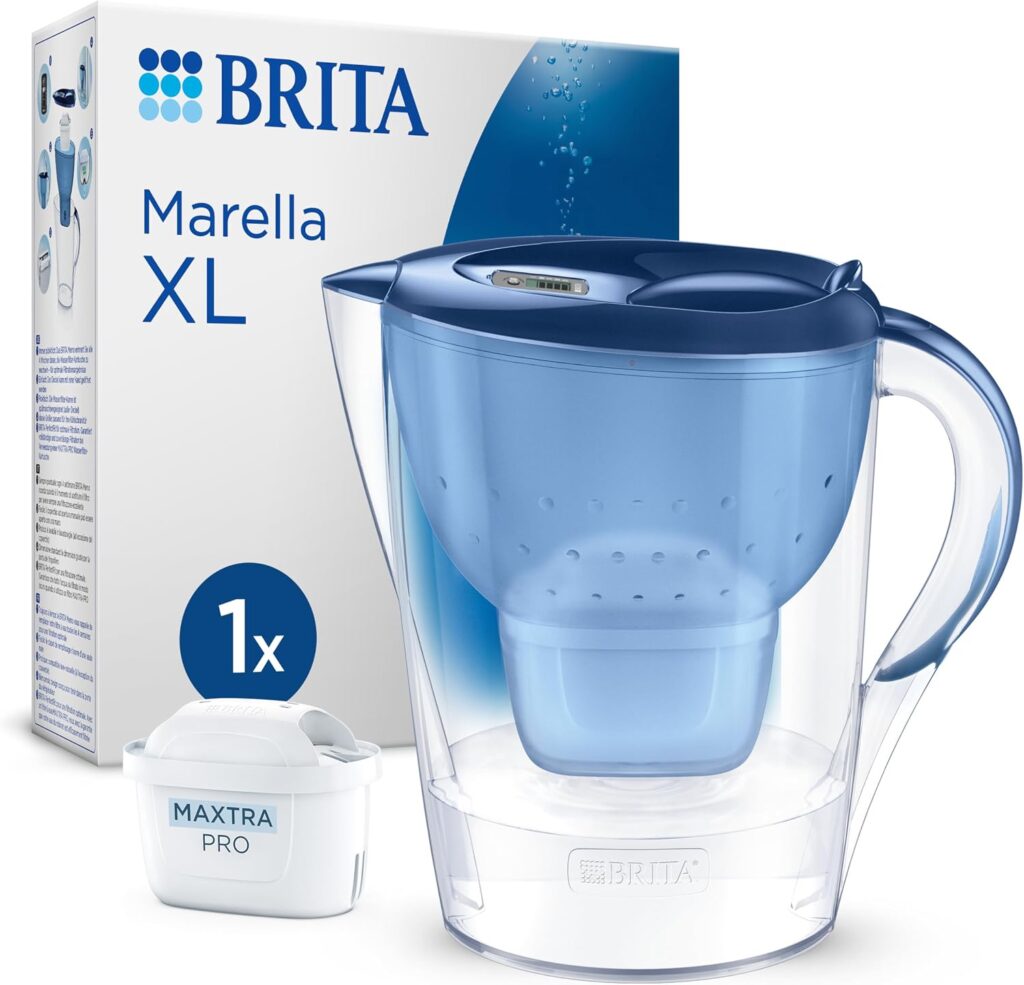
Yes. Keep filtered water cool, out of direct sunlight, and use it within a day or so. Check that the jug fits your fridge shelf or door before buying, especially for a larger model like the Marella XL.
Should I choose a filter jug or an under-sink filter?
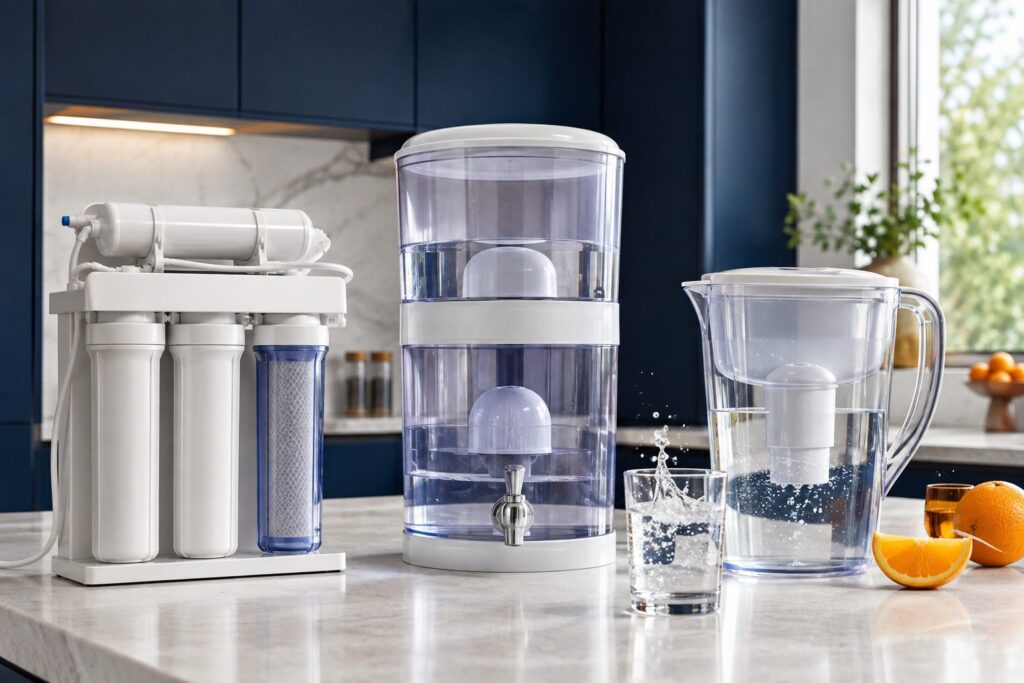
A filter jug needs no installation and suits most households that want better-tasting water. An under-sink or reverse osmosis system filters more thoroughly and supplies water on tap, but it needs plumbing and fitting.
Some links above are affiliate links. As an Amazon Associate we earn from qualifying purchases, at no extra cost to you. Links go to Amazon.com. Prices are illustrative — check the current price before buying.
Medical disclaimer. This guide is for general information only and is not medical advice. It is not intended to diagnose, treat, cure or prevent any condition. Always speak to a qualified healthcare professional before starting any new product, especially if you have an existing condition or take medication.