We'll tailor buying guides and product links to your country. You can change this anytime from the top bar.
Fitness & Active Health · Buying guide
Best Yoga Mats for Home Practice in 2026
An extra-thick foam mat, a 6mm TPE travel mat and a sweat-resistant physio mat compared on thickness, material and grip — to help you choose a mat that suits your joints and your floor.
A yoga mat is chosen on two numbers and one material, and almost nothing else. Thickness decides how kind the mat is to your knees and how much it interferes with your balance; the material decides whether it grips when you start to sweat. Everything else is colour. Distributing Care looked at what UK buyers are actually purchasing rather than at what gets marketed hardest.
We compared the three best-selling mats on thickness, material, surface finish and what comes with them. Below are an extra-thick foam mat for cushioning, a 6mm TPE mat light enough to travel with, and a high-density mat from a physiotherapy brand with a sweat-resistant finish.
How we tested & chose
Our shortlist comes from Amazon UK’s Best Sellers list in Yoga Mats, read on 29 August 2026 — a ranking by units sold, not by relevance or advertising spend. Distributing Care took the top ten, set aside the near-identical thick foam mats that would have produced the same recommendation three times over, and kept three that differ on thickness, material and grip. Thickness, material and included accessories were checked against each product listing.
What we weighed
Thickness, and the trade-off between cushioning and balanceMaterial: TPE or NBR foamGrip, and how the surface behaves once dampWeight and whether a carry strap is included
Compiled by the Distributing Care editorial team from current Amazon UK Best Sellers data. A mat reduces impact on the joints but does not make a posture safe. If you have a knee, hip, wrist or back condition, or you are pregnant, take advice from a GP, chartered physiotherapist or a qualified instructor before starting a new practice.
The picks, reviewed
No products have been added for United States yet.
Best Overall9.4/ 10 · Care Score
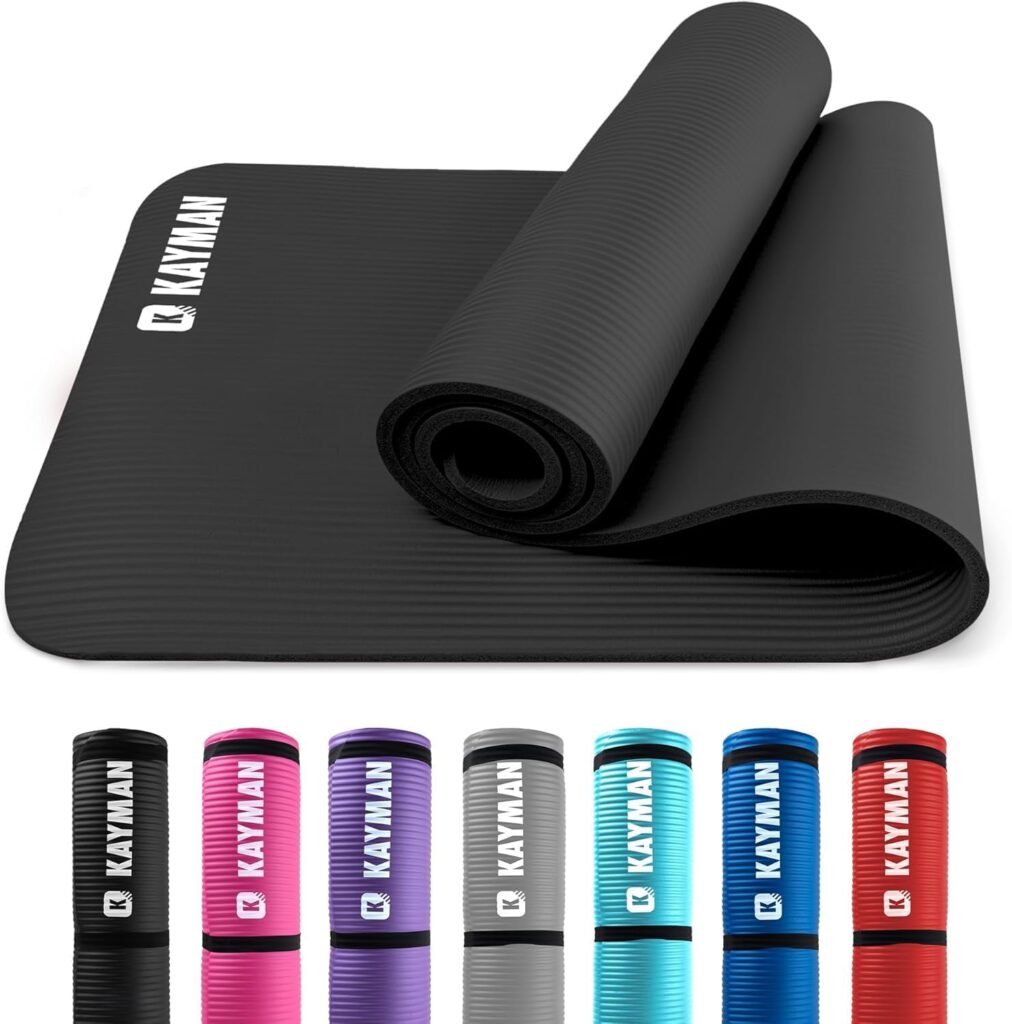
KAYMAN Yoga Mat – Multi-Purpose Extra Thick Foam Exercise Mats – Ideal Floor Mat for Pilates, Stretching, Resistance Workout & Therapy – Home & Gym Equipment Accessory
Rank 1 best seller: an extra-thick foam mat aimed at floor work, where cushioning matters more than balance.
Suits stretching and resistance work as well as yoga
Cons
Extra give makes standing balance postures harder
Bulkier to roll and store than a travel mat
Best for Travel9.2/ 10 · Care Score
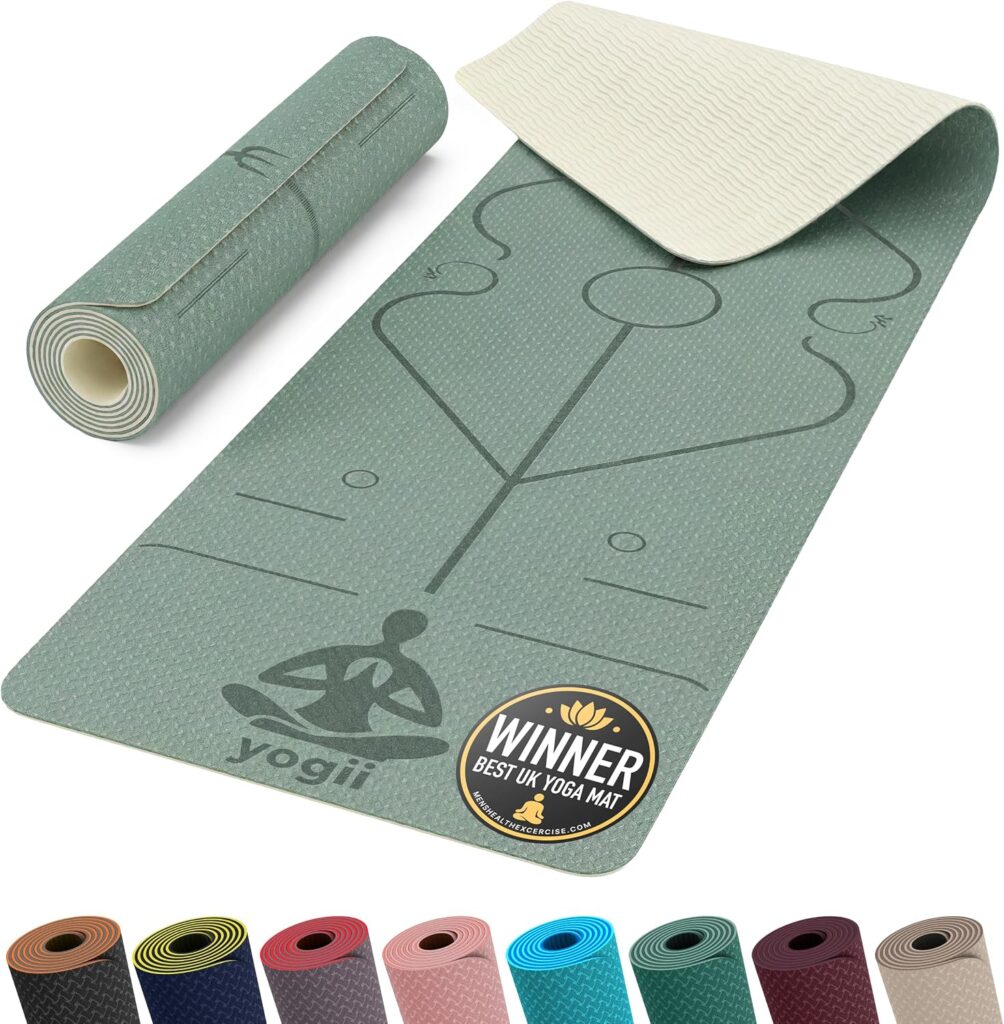
Yogii Yoga Mat - Non-Slip 6mm Thick TPE & Travel-friendly Yoga Mat - Perfect for Home & Gym Exercise Fitness & Pilates - With Laser Alignment Guides for Men & Women
Rank 2 best seller: 6mm of TPE with printed alignment guides, light enough to carry to a class.
Alignment guides help with hand and foot placement
Cons
Less cushioning than an extra-thick mat for kneeling work
Alignment markings are of little use once you know the postures
Best for Grip9/ 10 · Care Score
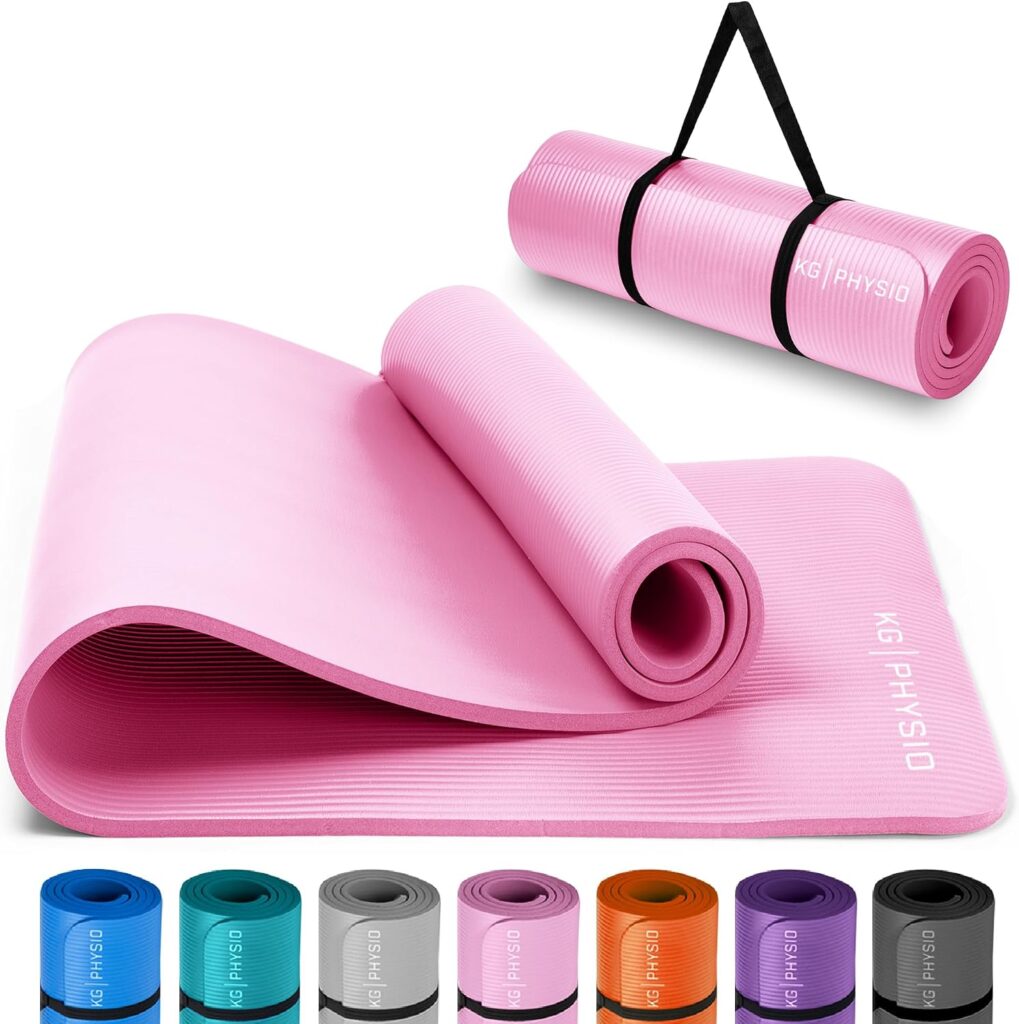
KG Physio Yoga Mat - Thick Yoga Mats for Women & Men, High-Density NBR Foam Excercise Mat, Non-Slip & Sweat-Resistant, Ideal for Pilates, Home Fitness and Home Workout - Strap Included
Rank 9 best seller: a high-density NBR mat from a physiotherapy brand, with a sweat-resistant finish and a strap.
Sweat-resistant finish addresses the most common grip complaint
Carry strap included rather than sold separately
High-density foam holds its shape under load
Cons
NBR foam is heavier to carry than TPE
Sells in lower volume than the top two picks
No products have been added for United Arab Emirates yet.
Frequently asked questions
Quick answers to what readers ask most about yoga mats.
What thickness of yoga mat is best?
Thickness is a trade-off between cushioning and stability, not a quality rating. Around 4 to 6mm is the usual general-purpose range and suits most people for most classes. Thicker mats of 8 to 15mm protect the knees, wrists and spine in kneeling and lying work, which is why they are often preferred for Pilates, stretching and rehabilitation, but the extra give makes standing balance postures noticeably harder. Thinner mats of 1 to 3mm give the firmest contact with the floor and fold small enough to travel with.
What is the difference between TPE and NBR yoga mats?
They are different plastics with different priorities. TPE, a thermoplastic elastomer, is lighter, tends to hold its grip better and is usually the choice for a mat you carry to classes. NBR is a nitrile foam that is thicker, softer and more cushioned, which makes it comfortable for floor work but bulkier to roll and carry, and it can feel slippery in standing postures. Natural rubber mats grip best of all and last longest, but they are heavy and unsuitable for anyone with a latex allergy.
How do you stop a yoga mat from slipping?
Most slipping is one of two separate problems, and they have different fixes. If the whole mat slides across the floor, the underside is the issue: unroll it on a clean, dry, hard surface, or put a rug gripper or a towel underneath it on laminate. If your hands and feet slide on the mat itself, that is a surface problem, usually sweat: lay a mat towel over the top, or wipe the mat down. New mats often have a manufacturing film that reduces grip for the first few sessions and wears off with use.
How do you clean a yoga mat?
Wipe it down with a damp cloth and a little mild soap, then let it dry flat and completely before rolling it up. Avoid alcohol, bleach, disinfectant sprays and anything abrasive, which break down the surface and destroy the grip over time. Do not put a foam mat in the washing machine or dry it on a radiator or in direct sunlight, as heat warps it permanently. Rolling away a damp mat is what causes the musty smell people blame on the material.
Do you need a different mat for Pilates than for yoga?
Not necessarily, though the ideal mat differs. Pilates is done largely lying and kneeling, with rolling movements along the spine, so a thicker and softer mat is generally more comfortable. Yoga includes standing balance postures where a thick mat works against you, so grip and firmness matter more than padding. A 6mm mat is the usual compromise if you do both. If your practice is mostly floor-based or you have sensitive knees, go thicker and accept that balance work will feel less steady.
Some links above are affiliate links. As an Amazon Associate we earn from qualifying purchases, at no extra cost to you. Links go to Amazon.com. Prices are illustrative — check the current price before buying.
Medical disclaimer. This guide is for general information only and is not medical advice. It is not intended to diagnose, treat, cure or prevent any condition. Always speak to a qualified healthcare professional before starting any new product, especially if you have an existing condition or take medication.